



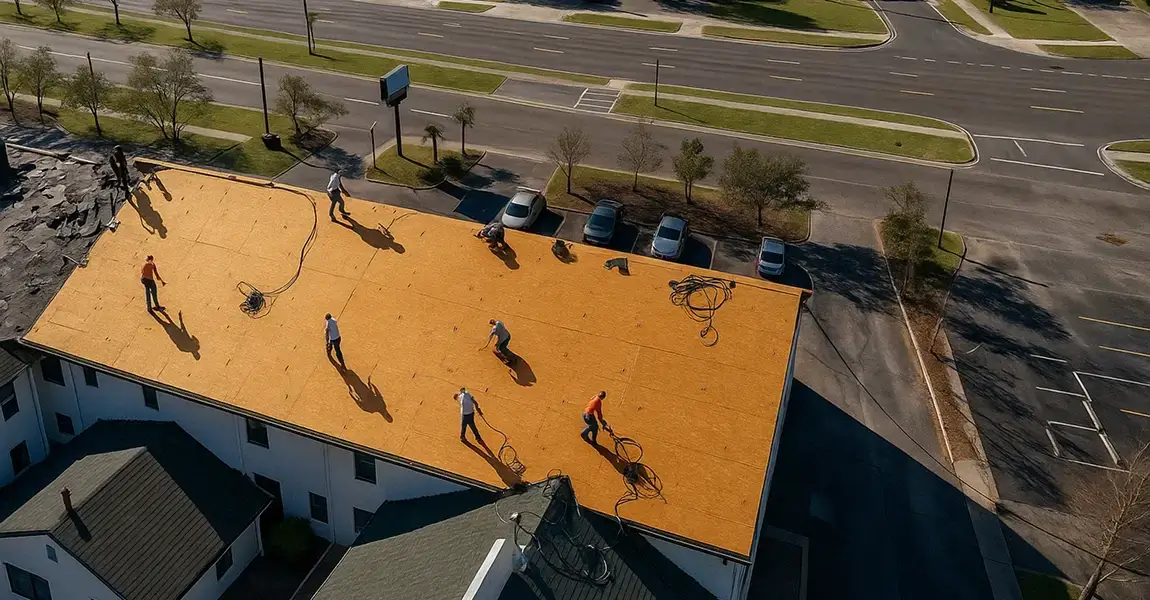
Choosing a commercial roofing contractor is one of the most important decisions a business owner or property manager can make. Your roof is not just a protective covering—it’s a critical part of your building’s infrastructure. It safeguards valuable assets, enhances energy efficiency, and ensures structural integrity. The process of choosing a commercial roofing contractor requires careful evaluation of expertise, trustworthiness, and long-term support.
Whether you own a retail plaza, industrial facility, or multi-unit office building, the right contractor will help you save money, avoid disruptions, and increase the lifespan of your roof. Let’s explore the top tips to follow when choosing a commercial roofing contractor who truly delivers value.
1. Check for Proper Licensing and Insurance
The very first step in choosing a commercial roofing contractor is verifying their licensing and insurance. A licensed contractor complies with local and state requirements and demonstrates credibility. Meanwhile, general liability and workers’ compensation insurance protect you from liabilities in case of accidents or damages during the project.
Failing to verify these credentials could expose your business to unnecessary legal risks and out-of-pocket expenses.
2. Prioritize Commercial Roofing Experience
Experience is non-negotiable when it comes to commercial roofing. Unlike residential projects, commercial roofing systems demand technical skills, advanced tools, and knowledge of specific materials such as TPO, EPDM, PVC, and metal.
Choosing a commercial roofing contractor with a strong portfolio of completed projects shows they understand unique commercial requirements like ventilation, drainage systems, load-bearing structures, and large-scale coordination.
3. Request References and Read Online Reviews
When choosing a commercial roofing contractor, trust is key. Always ask for at least three references from past commercial clients. Speak to those references about their experience, especially in terms of professionalism, timeline adherence, and issue resolution.
Also, review feedback on Google, Better Business Bureau, and trade-specific platforms. Look out for patterns—consistent complaints about poor communication or warranty refusals are red flags.
4. Review Roofing Options and Material Expertise
Another core aspect of choosing a commercial roofing contractor is understanding their familiarity with roofing materials suited for commercial buildings. They should be able to explain the benefits and downsides of:
- Thermoplastic (TPO and PVC)
- Modified Bitumen
- Built-Up Roofing (BUR)
- Metal Roofing Systems
Choosing the wrong material can lead to premature wear and costly repairs. A contractor with strong product knowledge ensures you get a roof that withstands your specific climate, use-case, and energy goals.
5. Get a Detailed Written Estimate
Transparency builds trust. Every legitimate commercial roofing contractor will provide a written estimate that includes:
- Scope of work
- Material specifications
- Labor costs
- Timeline and milestones
- Warranty terms
- Cleanup and safety provisions
Avoid vague verbal quotes or contracts lacking detail—they often lead to cost overruns or disputes.
6. Evaluate Warranty Coverage and Post-Project Support
Choosing a commercial roofing contractor also means assessing how they handle warranties and maintenance. You should receive:
- Manufacturer warranty (on roofing materials)
- Workmanship warranty (on installation)
- Optional maintenance packages (to preserve roof health)
Without a solid warranty, your investment is at risk. Ongoing maintenance also helps prevent issues like pooling water, punctures, and insulation damage.
7. Choose Contractors with Emergency Services
Texas weather can be brutal—hailstorms, strong winds, and intense heat can all take a toll on your roof. Choosing a commercial roofing contractor that offers emergency response ensures you’re covered when the unexpected happens.
Emergency services might include:
- Leak detection and patching
- Temporary waterproofing
- Damage assessment after storms
Quick action during emergencies prevents major losses and downtime for your business.
Conclusion
Choosing a commercial roofing contractor is more than checking a few boxes—it’s a strategic business decision. From verifying licenses to evaluating material knowledge and post-installation support, every step matters. A great contractor not only installs your roof but also protects your property for decades to come.
So, don’t rush the process. Take the time to vet, question, and compare. Choosing a commercial roofing contractor wisely now can save your business thousands in the long run and give you confidence that your building is protected—no matter what the Texas skies bring. Visit Viking Capital Group for expert services and advice.
Frequently Asked Questions
What documents should I request before hiring a roofing contractor?
Ask for a business license, insurance certificates, and a written estimate outlining materials, labor, and timeline.
Why is choosing a commercial roofing contractor with experience important?
Experienced contractors can better handle complex designs, materials, and large-scale scheduling for commercial properties.
How often should commercial roofs be inspected?
At least twice a year—once in spring and once in fall—and after any major weather events.
What are signs of a trustworthy roofing contractor?
Clear communication, transparent estimates, verified references, positive reviews, and no pressure sales tactics.
Is a maintenance plan worth it after roof installation?
Absolutely. Routine maintenance can extend your roof’s lifespan and prevent costly emergency repairs.